Thursday we found ourselves in the Mission, looking for dinner a little on the late side. We stumbled, soaked and shivering, into Flour+Water, where we were treated to one of the best meals I’ve had recently. Of course I had heard the hype, the great things from people who would know, but as a result I almost expected to be disappointed. Happily, my preconceptions did not get in the way of enjoying a stunningly good dinner.
We were seated immediately by a fairly pleasant hostess, but had to wait a bit before seeing our otherwise friendly waiter. They've done a great job using candlelight and warm woods to create an intimate but casual atmosphere, although I suspect at peak times it might feel crowded. At ten pm on a Thursday, it was relaxed and welcoming.
We were offered still and sparkling water, both on tap and complimentary (as it should be). Perusing the wine list revealed a good selection of hard to find Italian wines at very accessible prices ($30-$90). By the glass the choices are fewer, but well curated so that every dish and palate can be satisfyingly matched. Their beer selection is small but includes some standouts, like the Linden St. Brewery Black Lager I drank with my meal.
We decided to start with pastas, skipping the admittedly tempting pork trotter appetizer. I had to have the squid ink spaghetti with clams, squid, watermelon radish and chili oil. I had not had a squid ink pasta since a sublime experience at Rafael, in Lima, so ordering it was my challenge to Flour+Water. The spaghetti was beautiful, dark as night and fragrant with brine and the musky depth of the ink. The texture of the pasta was a perfect al dente, just firm enough to slightly resist my teeth, and the each noodle was silky. It tasted like wet earth and the sea, as poetic as that may sound. Despite being a seafood pasta, it was quite rich. The minimal sauce of ink and seafood juices was just enough to coat the pasta without obscuring the extraordinary flavor and texture of the pasta itself. Perfectly cooked clams and squid provided a nice textural counterpoint to the noodles. The one element that seemed to get lost was the chili oil, since I did not detect any spice whatsoever. It would have been nice to have a bright chili taste to cut the richness just a little, but to be honest I only thought this after the meal. While enjoying the decadence of this phenomenal dish, I thought of little else but my pleasure.
My friends had rosemary pappardelle with braised veal and a prosciutto, braised cabbage, fontina, potato and red onion pizza. The pappardelle was again texturally perfect, further evidence of Flour+Water’s clear mastery of pastas. Paired with the veal, the dish was light but incredibly savory. My first impression was that the rosemary was overpowering, but as I chewed and swallowed the mild, almost sweet veal created a perfect balance with the astringency of the rosemary. My mouth felt completely alert after tasting this dish, and I would order it again in a minute. Unfortunately for this review, I did not taste the pizza, but it looked delicious and my friend quite enjoyed it.
We all split a root vegetable gratin, which was everything gratin should be: creamy and loaded with butter. The root vegetables added a twist to the usual butter and potatoes gratin, making it more complex and even richer in flavor, if that can be believed. I felt like I could hear Thomas Keller extolling the virtues of butter in the background with every bite I took. Trust me that this is a good thing.
We ended with a good macchiato and a chocolate budino; a dense, almost fudgy pudding. This was explosively good, with just enough sea salt to make your mouth salivate and just enough bitterness from the chocolate. It was topped with a coffee caramel whipped cream that would have made me happy on its own. The flavors were perfect, though I would have preferred a slightly less dense consistency for the budino itself. Ultimately it made my mouth so happy that this small concern was just that.
In conclusion, I would like to dispel the idea that this restaurant is somehow overpriced or does not provide value for money. Neither of these assertions is true. The portions were plenty, neither precious nor grotesque. I was honestly surprised that the bill for three people’s meals, a side, dessert, coffee and five beers came out to a modest $30 per person. Considering the stellar quality of the food, good service and elegant surroundings, Flour+Water is one of the more affordable choices at its level. I would recommend it to anyone who appreciates perfect pasta, a good glass of wine and that uniquely Californian aesthetic of well-executed casual elegance.
I loved Flour+Water, and I will be returning as often as possible.
Buon Appetito!
Sunday, January 22, 2012


Sunday, November 6, 2011
Sunday Night Dinner
I'm currently making a pan roasted chicken breast with a garlic thyme butter. I will serve it sliced over spaghetti squash and fresh spinach tagliolini. With more garlic and olive oil (and maybe a little more butter, because I love the texture of butter on pasta).
I don't own a cast iron skillet, so I'm making do with an oven proof skillet in which to first pan sear the chicken then bake it to doneness at 400 degrees (15 or 20 minutes). The benefit of this method is that you get a nice brown crust on the chicken, making it look all the more appetizing and have a nice textural contrast between crispy skin and juicy meat.
This is my first time making spaghetti squash. I cut it in half, removed the seeds, brushed it with olive oil and put both halves face down on a baking sheet in the oven for 15 minutes, also at 400 degrees. I'll scoop it out and toss it with the pasta to serve. The green pasta and yellow squash should be visually appealing.
It turned out simple and tasty: chunks of juicy chicken, al dente pasta and the sweet fresh taste of the squash. The pan juices, sauteed onions and butter became a light sauce. The squash and pasta didn't mix as easily as I'd have liked, I will have to explore why. I will be making this again, perhaps with some thinly sliced roasted poblano peppers tossed into the pasta.
I don't own a cast iron skillet, so I'm making do with an oven proof skillet in which to first pan sear the chicken then bake it to doneness at 400 degrees (15 or 20 minutes). The benefit of this method is that you get a nice brown crust on the chicken, making it look all the more appetizing and have a nice textural contrast between crispy skin and juicy meat.
This is my first time making spaghetti squash. I cut it in half, removed the seeds, brushed it with olive oil and put both halves face down on a baking sheet in the oven for 15 minutes, also at 400 degrees. I'll scoop it out and toss it with the pasta to serve. The green pasta and yellow squash should be visually appealing.
It turned out simple and tasty: chunks of juicy chicken, al dente pasta and the sweet fresh taste of the squash. The pan juices, sauteed onions and butter became a light sauce. The squash and pasta didn't mix as easily as I'd have liked, I will have to explore why. I will be making this again, perhaps with some thinly sliced roasted poblano peppers tossed into the pasta.
Thursday, October 13, 2011
Perfect Guacamole
There is no good reason to buy already prepared guacamole. It is quite easy to make a delicious version if you start with good ingredients. Buy fresh, whole avocado, serrano or jalapeño chilies, red onion, garlic, cilantro, lime and salt.
The avocado must be ripe enough to be springy when you squeeze a little, but not squishy or soft. The chilies should be firm and intensely colored whether green, red, or both. Serrano chilies tend to be spicier, but it varies greatly from chili to chili. If you want a serious kick go for the habaneros (with caution, please). Red onions and garlic heads should not have any soft spots or deep discolorations. Cilantro should be green and lustrous, not brown and wilty. Heads up, cilantro and parsley are not the same thing, so ask if you aren't sure. Limes should be firm but not hard, smooth skinned and bright green.
I’m being deliberately vague about quantities, but the ones I mention are for one large avocado. Taste your work often with a spoon, not chips. The salty chip will skew your perception of the flavors.
Dice the garlic first and let it breathe while you chop up everything else. One clove should be plenty.
Slice the avocado(s) all the way around the long way (from the pointy end to the round end then up the other side) then twist the halves a little to pull them apart. Be gentle! To remove the pit, firmly put a knife in it as if you want to cut it in half and pull it out.
Use a spoon and scoop the flesh out into a bowl, avoiding any blackish parts. Smash the avocado with the tines of a fork until it is chunky. You might need to add a little water (but just a dribble).
Roll a lime against the counter, putting pressure on it with the flat of your hand. This releases the juices and softens the lime to make it easier to squeeze. Cut it in half and squeeze half over the avocado. Set aside the other half to add as needed for moisture and to prevent the avocado fro oxidizing (turning brown).
Dice the chilies and add them. Remove some or all of the seeds before dicing to control the level of spice, although since I like it hot I leave them in. Use one jalapeño or a couple serranos at most.
Dice a quarter of a red onion and add it (you can add more later if necessary).
Add the garlic.
Tear off a small handful of cilantro, wash it and roughly chop it. Add it to the bowl.
Still using the fork, mix everything up and gently mash. If dry, add more lime or water.
Salt to taste. Add more of anything that it needs until you love it.
Sprinkle a little queso fresco on top to serve with chips. Put it on top of tacos, quesadillas or tortas, turkey sandwiches, gazpacho…really on anything that you think would be tasty.
If you don’t like anything that I’ve included, I give you permission to take it out. Get creative with your guac: put fruits like mango or peach in it for a tropical vibe, add kumquats or oranges for a citrus kick…anything goes. But remember, if all variations fail you, the classic version above will always be delicious.
The avocado must be ripe enough to be springy when you squeeze a little, but not squishy or soft. The chilies should be firm and intensely colored whether green, red, or both. Serrano chilies tend to be spicier, but it varies greatly from chili to chili. If you want a serious kick go for the habaneros (with caution, please). Red onions and garlic heads should not have any soft spots or deep discolorations. Cilantro should be green and lustrous, not brown and wilty. Heads up, cilantro and parsley are not the same thing, so ask if you aren't sure. Limes should be firm but not hard, smooth skinned and bright green.
I’m being deliberately vague about quantities, but the ones I mention are for one large avocado. Taste your work often with a spoon, not chips. The salty chip will skew your perception of the flavors.
Dice the garlic first and let it breathe while you chop up everything else. One clove should be plenty.
Slice the avocado(s) all the way around the long way (from the pointy end to the round end then up the other side) then twist the halves a little to pull them apart. Be gentle! To remove the pit, firmly put a knife in it as if you want to cut it in half and pull it out.
Use a spoon and scoop the flesh out into a bowl, avoiding any blackish parts. Smash the avocado with the tines of a fork until it is chunky. You might need to add a little water (but just a dribble).
Roll a lime against the counter, putting pressure on it with the flat of your hand. This releases the juices and softens the lime to make it easier to squeeze. Cut it in half and squeeze half over the avocado. Set aside the other half to add as needed for moisture and to prevent the avocado fro oxidizing (turning brown).
Dice the chilies and add them. Remove some or all of the seeds before dicing to control the level of spice, although since I like it hot I leave them in. Use one jalapeño or a couple serranos at most.
Dice a quarter of a red onion and add it (you can add more later if necessary).
Add the garlic.
Tear off a small handful of cilantro, wash it and roughly chop it. Add it to the bowl.
Still using the fork, mix everything up and gently mash. If dry, add more lime or water.
Salt to taste. Add more of anything that it needs until you love it.
Sprinkle a little queso fresco on top to serve with chips. Put it on top of tacos, quesadillas or tortas, turkey sandwiches, gazpacho…really on anything that you think would be tasty.
If you don’t like anything that I’ve included, I give you permission to take it out. Get creative with your guac: put fruits like mango or peach in it for a tropical vibe, add kumquats or oranges for a citrus kick…anything goes. But remember, if all variations fail you, the classic version above will always be delicious.
Saturday, April 2, 2011
Paris, 2010
While in Paris last year for a Political Science program, I obviously prioritized my palate and stomach over everything except museums. Despite the plethora of markets, cafes, restaurants and street food, I found myself craving a gourmet burger to the point of pain. Not a hamburger crepe, which Monsieur Chef at the crepe stand on the corner thoughtfully offered, nor a hamburger on baguette, nor un Big Mac, s'il vous plaît. I wanted a burger like those at Burgermeister in San Francisco (one of my favorite burgers ever): thick and juicy, with top quality ingredients. I thought through all the details of my potential burger, from which buns I would use from the patisserie on the corner to specific cheeses and cuts of bacon. This being Paris, some burger elements are more available (and affordable) than others. Luckily, I don't like ketchup or tomatoes on a good burger, so the terrible winter tomatoes were not an issue.
Anyway, we came up with this:
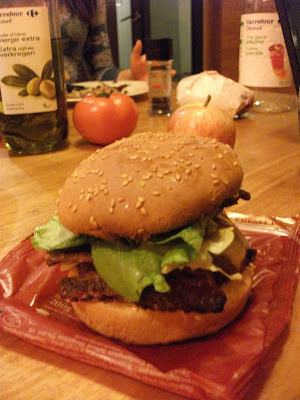
I believe that is a traditional 80/20 ground beef, gruyère, and thick-cut meaty bacon. Delicious. Seriously, it was great...or maybe I was desperate for some burger goodness. But my friends and I were all thoroughly satisfied by our DIY Parisian burger, so it was a success.
Anyway, we came up with this:

I believe that is a traditional 80/20 ground beef, gruyère, and thick-cut meaty bacon. Delicious. Seriously, it was great...or maybe I was desperate for some burger goodness. But my friends and I were all thoroughly satisfied by our DIY Parisian burger, so it was a success.
Monday, March 7, 2011
Commodity Fetishes and Fantasy Girls
This DoubleX article about the possible correlation between women’s sexual liberty and men’s achievement bothers me for two central reasons. The first is how it links the notion of a sexual economy in which the man buys sex at a market rate to numbers that suggest women want marriage and babies. The article then suggests that women are ‘underselling’ their sexual capital in order to fulfill their desire for marriage etc., such that the man whose commitment they purchase is varying types of underachiever. Following the logic, I am left with a society of women so desperate for the paradigmatic American family that their standards have just melted away.
The second is the idea that women’s substantive empowerment in all arenas, including the bedroom, actively creates conditions that demotivate men. I don’t disagree at all with the ostensible thesis of the article, which is that men still have the upper hand in hetero premarital relationships. I do find it a bit scary that at one point it argues that more women means more “feminist” sexual permissiveness and thus, more male satisfaction. Feminism, or at least sexual openness, is thus just another way for women to satisfy the male fantasy, while a regressive focus on filling the Lacanian ‘feminine lack’ through marriage is the logical secret to men’s achievement. In a Freudian or Lacanian psychoanalytic framework, desire is the motivator of all describable acts, meaning that without the tantalizing pull of the ‘unassailable’, sexually unavailable woman, the man has nothing to strive for and thus becomes a PBR-swilling, entitled twerp. Or so the psychological logic of the article suggests.
The sexually available woman, who for whatever motive is willing to enter into the sexual relationship, gives a man exactly what he wants according to his fantasy. But with the mystery of “Woman” so easily plumbed, he has no reason to struggle for sex or anything else. According to this construction, women who know what they want and aren’t afraid of their sexuality are apparently holding men back. Or to be even bolder, feminists are holding men back.
The article is not so explicit, but in the past year I’ve seen a few variations on a theme in which the rise of women in the culture and economy threatens the very necessity of maleness. There was even an issue of The Atlantic magazine that worried whether the further growth of women’s power in North American society would make men obsolete. One thing they share, regardless of the sex of the writer, is a more traditional masculine perspective where a man locates his worth in his career, his family and his wealth. This new trend of worrying about the future of males seems to ask, if women’s success only makes life worse for men, then what is the worth of women’s success?
Frankly, I dislike being asked to question the worth of my success because twenty something boys are supposedly underachieving. Also, I’m not waiting for a man to commit to me, nor am I sexually ‘cheap’ (even at the ripe old age of twenty-two). But perhaps that’s just me.
Really though, I know some pretty cool young guys who are down to have relationships, but want to wait on the ‘serious’ part of those relationships (i.e. cohabitation or engagement). Maybe the young women in the article have expectations that are inconsistent with the guys they date because the guys are inappropriate choices. But maybe those bad choices are because women feel sex is bad unless it happens within the context of a ‘serious’ relationship, but they don’t act upon that feeling because modern women are expected to be more open to casual encounters. That second expectation finds support from both feminist and macho perspectives precisely because modern notions of sexual appropriateness mean easier fantasy fulfillment for men along with more sexual empowerment for women. We’re describing young women whose relationships are dissatisfying because they are made to feel like bad women for succumbing to the powerful expectation that sex is the norm in all relationships, regardless of how sexually active they wish to be.
Patriarchy isolates women from fully occupying their sexuality by confusing us all, women and men, with wildly contradictory messages. First it teaches us that sexual women are bad, but then it dictates that men should only value women for their sexual function. Combine that with the aftereffects of the sexual revolution for both sexes, and you have women who have been encouraged to act bad as long as doing so gets them a husband, and men who expect women to be sexually receptive without demanding respect.
As a culture, we still believe strongly in the redemptive power of marriage; strongly enough that a so-called hooker can become a “good” woman, erasing a history that discomfits mainstream culture, or a mistress can become a fairly respectable political wife. Though they are vivid, antithetical to the American family and definitely not virgins, becoming someone’s wife redeems them. In the movies, bad women have been redeemed from Hitchcock’s Marnie to Pretty Woman, and the way they take the leap into respectability is a nice wedding and a future of channeling their sexuality into sex with the husband. Marnie isn’t saved by her marriage, per se, but her husband imagines their forced marriage will reform her wild ways. When she resists his imposition of values and does not want to have sex with him, he (perhaps) rapes her. He has fulfilled his part of the bargain by marrying her and thus saving her from herself and so he takes his due by insisting upon the sexual relationship. He is owed sex because he saves her from living out her life as a bad woman.
If girls grow up secretly believing marriage is what saves women from being floozies, then of course they’ll be disappointed when sex is frankly expected of them and not treated as part of a process of emotional involvement. Marriage is hardly an option in most sexual relationships, utterly defying the cultural bifurcation of femininity into sex object or wife.
Ultimately, the issues at hand follow a common thread. They ask: does women’s success always have to be at the expense of men? Can we talk about this without blaming women somehow? What do you think?
The second is the idea that women’s substantive empowerment in all arenas, including the bedroom, actively creates conditions that demotivate men. I don’t disagree at all with the ostensible thesis of the article, which is that men still have the upper hand in hetero premarital relationships. I do find it a bit scary that at one point it argues that more women means more “feminist” sexual permissiveness and thus, more male satisfaction. Feminism, or at least sexual openness, is thus just another way for women to satisfy the male fantasy, while a regressive focus on filling the Lacanian ‘feminine lack’ through marriage is the logical secret to men’s achievement. In a Freudian or Lacanian psychoanalytic framework, desire is the motivator of all describable acts, meaning that without the tantalizing pull of the ‘unassailable’, sexually unavailable woman, the man has nothing to strive for and thus becomes a PBR-swilling, entitled twerp. Or so the psychological logic of the article suggests.
The sexually available woman, who for whatever motive is willing to enter into the sexual relationship, gives a man exactly what he wants according to his fantasy. But with the mystery of “Woman” so easily plumbed, he has no reason to struggle for sex or anything else. According to this construction, women who know what they want and aren’t afraid of their sexuality are apparently holding men back. Or to be even bolder, feminists are holding men back.
The article is not so explicit, but in the past year I’ve seen a few variations on a theme in which the rise of women in the culture and economy threatens the very necessity of maleness. There was even an issue of The Atlantic magazine that worried whether the further growth of women’s power in North American society would make men obsolete. One thing they share, regardless of the sex of the writer, is a more traditional masculine perspective where a man locates his worth in his career, his family and his wealth. This new trend of worrying about the future of males seems to ask, if women’s success only makes life worse for men, then what is the worth of women’s success?
Frankly, I dislike being asked to question the worth of my success because twenty something boys are supposedly underachieving. Also, I’m not waiting for a man to commit to me, nor am I sexually ‘cheap’ (even at the ripe old age of twenty-two). But perhaps that’s just me.
Really though, I know some pretty cool young guys who are down to have relationships, but want to wait on the ‘serious’ part of those relationships (i.e. cohabitation or engagement). Maybe the young women in the article have expectations that are inconsistent with the guys they date because the guys are inappropriate choices. But maybe those bad choices are because women feel sex is bad unless it happens within the context of a ‘serious’ relationship, but they don’t act upon that feeling because modern women are expected to be more open to casual encounters. That second expectation finds support from both feminist and macho perspectives precisely because modern notions of sexual appropriateness mean easier fantasy fulfillment for men along with more sexual empowerment for women. We’re describing young women whose relationships are dissatisfying because they are made to feel like bad women for succumbing to the powerful expectation that sex is the norm in all relationships, regardless of how sexually active they wish to be.
Patriarchy isolates women from fully occupying their sexuality by confusing us all, women and men, with wildly contradictory messages. First it teaches us that sexual women are bad, but then it dictates that men should only value women for their sexual function. Combine that with the aftereffects of the sexual revolution for both sexes, and you have women who have been encouraged to act bad as long as doing so gets them a husband, and men who expect women to be sexually receptive without demanding respect.
As a culture, we still believe strongly in the redemptive power of marriage; strongly enough that a so-called hooker can become a “good” woman, erasing a history that discomfits mainstream culture, or a mistress can become a fairly respectable political wife. Though they are vivid, antithetical to the American family and definitely not virgins, becoming someone’s wife redeems them. In the movies, bad women have been redeemed from Hitchcock’s Marnie to Pretty Woman, and the way they take the leap into respectability is a nice wedding and a future of channeling their sexuality into sex with the husband. Marnie isn’t saved by her marriage, per se, but her husband imagines their forced marriage will reform her wild ways. When she resists his imposition of values and does not want to have sex with him, he (perhaps) rapes her. He has fulfilled his part of the bargain by marrying her and thus saving her from herself and so he takes his due by insisting upon the sexual relationship. He is owed sex because he saves her from living out her life as a bad woman.
If girls grow up secretly believing marriage is what saves women from being floozies, then of course they’ll be disappointed when sex is frankly expected of them and not treated as part of a process of emotional involvement. Marriage is hardly an option in most sexual relationships, utterly defying the cultural bifurcation of femininity into sex object or wife.
Ultimately, the issues at hand follow a common thread. They ask: does women’s success always have to be at the expense of men? Can we talk about this without blaming women somehow? What do you think?
Saturday, February 19, 2011


Friday, February 18, 2011

Subscribe to:
Posts (Atom)